

News
Natalie Muradyan: “When You See Other Girls Succeeding, It Normalizes Your Own Ambitions”

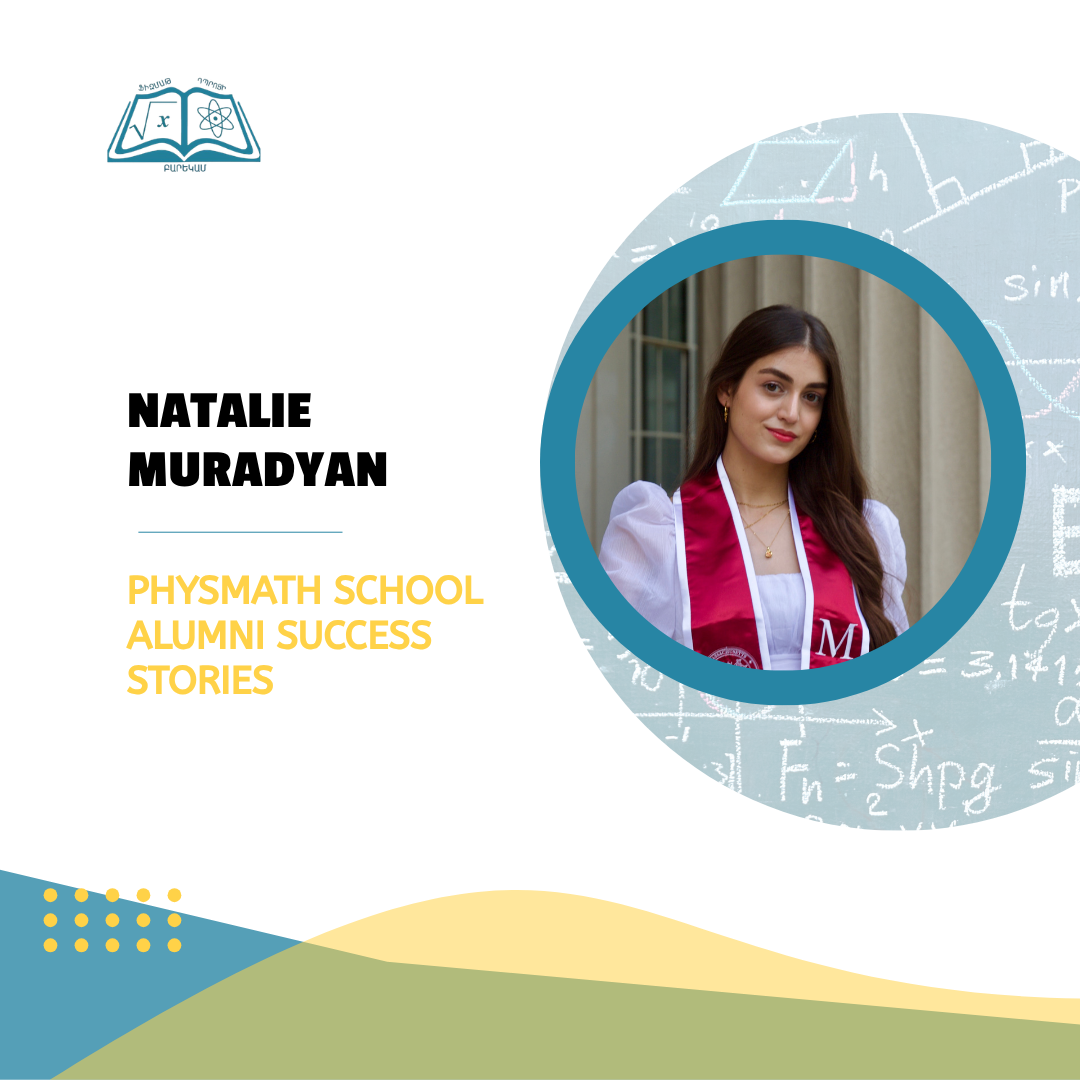
May 12 marks the International Day of Women in Mathematics. On this occasion, we spoke with PhysMath School alumna Natalie Muradyan, whose journey is a compelling example of how knowledge, dedication, and perseverance can open doors to global opportunities.
Can you tell us about your journey from PhysMath School to where you are today?
My journey into STEM began in middle school, where my love for mathematics and other technical subjects led me to look for a new challenge. My father, who attended PhysMath as well, encouraged me to apply. I studied hard for the entrance exams and was accepted, but the transition was a significant adjustment. The academic pace was much more intense than at my previous school, and for the first time, I realized I was not among the top students in the room.
However, this environment helped me discover my competitive spirit. Rather than being discouraged, I became determined to improve and reach the level of the classmates I admired. I remember speaking with my homeroom teacher about my goals; she was incredibly supportive and assured me that if I worked hard, I would succeed. What made PhysMath truly special was this unique balance between high competition and deep support. For instance, there was one specific classmate who was exceptionally talented, and I made it my personal goal to reach his level. Despite my clear competitiveness, he was never anything but kind and helpful: to this day, we are still good friends! This was true for my entire peer group; we were all striving for excellence, and we were pushing each other to get there together.
Eventually, my teachers recognized my passion for problem-solving and encouraged me to join the math club. I found a community of friends there who inspired me to challenge myself further. I am so grateful to the educators who invested so much time in us and created an environment where we felt seen. After several attempts and some setbacks, I was fortunate enough to represent my country at the International Math Olympiad, where I earned a bronze medal. That experience remains one of my proudest moments because it taught me that resilience and a supportive community are just as important as talent.
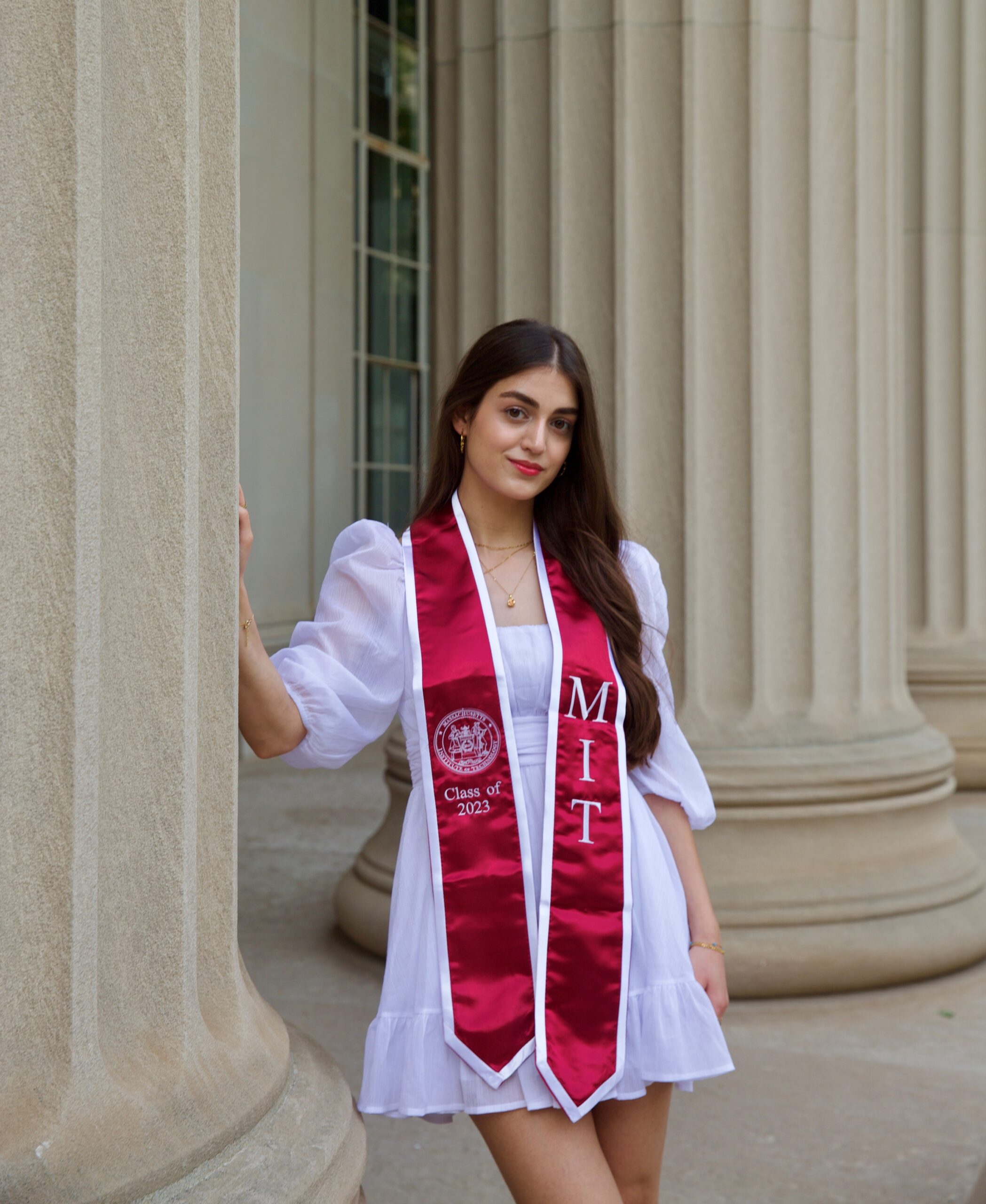
As graduation approached, I felt inspired to continue my education abroad. I was overjoyed to be accepted into MIT, where I spent the next few years not only growing academically but also expanding my worldview. While I initially planned to study Mechanical Engineering, my exposure to different fields led me to realize that my true passion was in Computer Science. I eventually completed both my Bachelor’s and Master’s degrees in Computer Science and Engineering. Today, I am working as a Systems Engineer, and I still carry the same mindset I developed at PhysMath: staying curious, pushing my limits, and valuing the community around me.
What first sparked your interest in mathematics and STEM fields?
I have always enjoyed studying, but growing up, it was difficult for me to choose a favorite subject because I was curious about everything: from languages and literature to physics. However, I found myself drawn to mathematics especially because of its inherent logic. Unlike subjects that required heavy memorization, such as history where I had to remember specific dates and events, math felt very natural to me. I loved the idea that if I truly understood the core principles, I could re-derive formulas myself and visualize how everything fit together.
My appreciation for the field deepened significantly once I arrived at PhysMath and joined the math clubs. It was there that I began working on problems that were not just academic exercises, but elegant puzzles that could explain the world around us. These types of problems showed me that math is more than just numbers; it is a way of thinking. That sense of discovery and the satisfaction of finding a logical solution are what truly sparked my interest in STEM.
What were some of the biggest challenges you faced during your studies?
I think one of the most difficult things is staying motivated and consistent when you are surrounded by so many brilliant people. It is easy to feel discouraged if you focus on how far ahead others might be, and there were certainly times when I faced setbacks or didn’t see the immediate results of my hard work. I had to learn how to keep pushing forward even when I felt I had disappointed myself or others; I realized that resilience is a muscle you have to build.
There was also a social challenge involving how I spent my time. In high school, it is natural to want to do things together with your close friends․ It took a lot of personal determination to stick with my chosen path when it felt like I was missing out on those shared experiences. However, I am very glad I persevered.
How did PhysMath School shape your academic path and mindset?
PhysMath profoundly deepened my approach to learning. While I was never a proponent of memorization, the school made it even more obvious that a deep, conceptual understanding is the way I master a subject best. Because of the talented teachers and the high level of the curriculum, I learned to look at problems in much more depth. I realized that if I grasped the underlying logic, I could derive the formulas myself: a mindset that has been invaluable to me to this day.
I am also incredibly appreciative of the school’s structure, which encouraged a unique sense of community. It was common, and even encouraged, for us to stay in the classrooms after hours to work. Many of my favorite memories are of my friends and me sitting in those classrooms late into the afternoon, preparing for exams together and helping one another through the most difficult material.
What truly set PhysMath apart, however, was that it wasn’t just about the academics. We had a very active student life and many cultural events that I cherish. PhysMath provided a rare environment where we could pursue high-level science while staying connected to our culture and building lifelong bonds. That balance between rigorous study and a vibrant community shaped both the engineer and the person I am today.
What changes have you noticed in the participation of girls in STEM over the years?
I have been very encouraged to see a clear increase in the number of girls pursuing STEM and participating in high-level competitions. One thing that makes me particularly happy is seeing Armenia’s participation in the European Girls’ Mathematical Olympiad (EGMO) over the past two years. When I was a student, participating in the EGMO was a dream of mine, but at that time, the funding simply wasn’t available to send a team. Seeing that door open for the current generation of girls is wonderful; it represents a real shift in how we prioritize and invest in female talent.
I also recognize that this progress didn’t happen by accident. I am very grateful to the teachers who made an explicit effort to encourage girls to join the math clubs and participate in olympiads.
In your opinion, what is the most important support system for young girls entering STEM?
In my opinion, the most important support system is a combination of early encouragement and an environment that fosters a sense of belonging. It begins with ensuring that young girls don’t prematurely close doors on themselves. Early encouragement from family and educators is vital: not necessarily to dictate a career path, but to ensure they feel that they can pursue STEM if they choose to. It is about giving them the confidence to know that no field is off-limits.
Once that interest exists, the environment at school becomes the next crucial layer. Because PhysMath is a specialized STEM school, you are naturally surrounded by peers who are deeply passionate about these subjects, which is incredibly motivating. I was fortunate that my specific class had relatively more girls than others; we were all highly motivated to excel, and having that shared drive was a great experience. When you see other girls around you pushing themselves and succeeding, it normalizes your own ambitions․
Finally, mentorship is key. Having educators who are invested in your future and who push you to challenge yourself provides the guidance needed to navigate difficult moments. When you combine that mentorship with a supportive peer group, it creates a structure that allows you to take risks.
What advice would you give to girls who are unsure about choosing mathematics or STEM careers?
It is perfectly normal to be unsure about your career path; I still think about my own future and next steps all the time. But if you’re thinking about closing the door on STEM because you’re worried you aren’t ‘good enough,’ or because you’re afraid of the competition, I’d really encourage you to stop and think. Ask yourself: are you making this choice because it’s what you want, or because you’re worried about the difficult journey ahead?
When I face a difficult decision, I try to look five years into the future. I ask myself if I would be proud of the person who took the risk and stuck with the challenge, or if I would regret letting a great opportunity pass by because it felt intimidating at the time. I still use this perspective today. Whenever I am navigating a complex problem at work, I remind myself how fulfilling it will feel to look back and realize I mastered something that once felt impossible.
If you could send one message to PhysMath students today, what would it be?
I would say: cherish your time at school! Make as many friends as possible and ‘work hard, play hard.’ Some of my best memories aren’t just about the academics, but the life we lived outside the classroom: playing frisbee and playing outdoors after class, walking through the city to get ice cream, and those midnight surprises to wish friends a happy birthday. Those bonds are what make the hard work worth it.
At the same time, I’d encourage you to start being intentional about your future. Your next steps won’t always be obvious, and you’ll need to be the one to seek out internships and opportunities. Enjoy your youth and make those memories, but recognize that a little investment in your future now will go a long way. Your future self will definitely thank you for it!